Dialysis teams
TransplantCheck for dialysis teams
What your unit gets, and a free pilot.
At intake
On the day of a patient’s first dialysis treatment, during intake, the unit can refer them to TransplantCheck for transplant empowerment and help finding a transplant center.
Find out what came in with them.
The appointment is on the calendar. The ride, the missed shift, the question they haven’t asked yet—those may arrive with them.
A journal entry gives them a place to begin. What they choose to share gives the unit a place to listen.
“I can do the tests. I cannot get there on Tuesdays.”
The same date. A different day.
Clinical milestones tell one part of the story. Their words can tell the unit what that moment means.
The next step starts with what they say.
Make their words part of the unit’s next conversation.
“Can we talk about it again?”
“The ride is the hard part.”
“I am home. Still worried.”
Not every concern arrives as a question. Sometimes it is a few words about sleep, work, family, or getting through today.
TransplantCheck gives patients a journal and check-ins to share with their care team, on their terms.

Their story has more than one care team.
Care changes hands. The person in the conversation is still the same.
The unit can record transplant steps alongside what patients share: a center choice, referral progress, and the center’s reply.
Transplant centers make their own decisions and manage specialist care.
For the care team
Federal rules say dialysis facilities must track each transplant referral, monitor waiting-list status and contact the transplant center at least annually and when status changes.1
For patients and families
OPTN policy says inactive kidney patients keep earning waiting time but do not receive organ offers.2
What does “inactive” mean on the kidney transplant waiting list?
Continuity begins with their questions.
A place for their words. A way for the unit to listen.
This is the current beta.
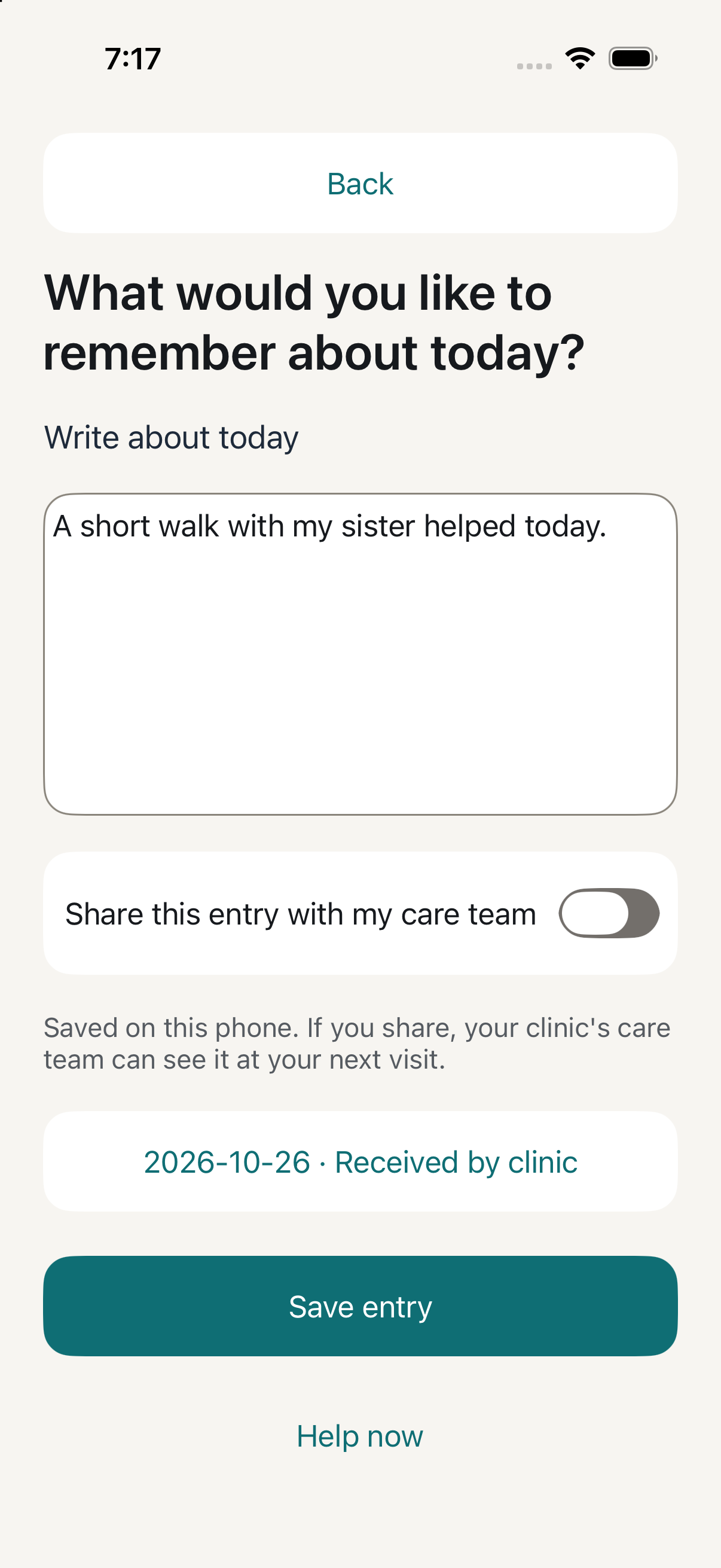
Patients choose what to share.
Journal entries preserve their own words. Check-ins ask about Body, Mind, Load and Life, with optional symptoms. Treatment-day check-ins focus on Body and Load.
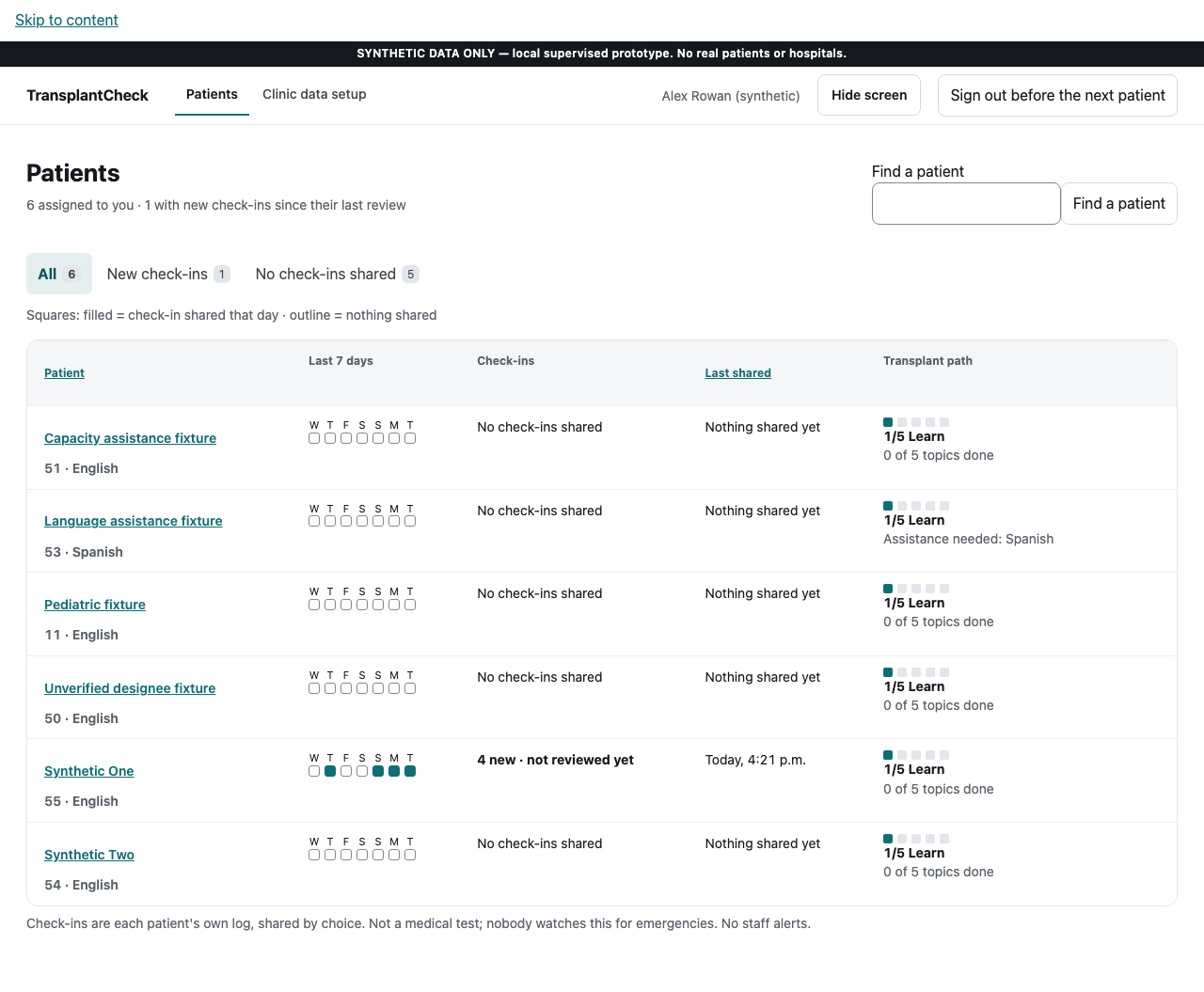
The team reviews what they shared.
Staff can read shared entries and check-ins alongside recorded transplant steps. A review mark records who looked and when.
Their story. Their choice to share.
Sharing starts off. Check-ins go to the care team only after the patient says yes, and they can turn sending off later.
On iPhone, unshared entries stay on the phone. Browser entries are saved with the clinic but aren’t visible to the care team in TransplantCheck unless shared. The two versions keep separate histories.
A conversation tool. With clear limits.
Nobody watches check-ins for emergencies; patients can use Help now. The care team sees new alerts inside TransplantCheck, but no email, text or push alert is sent.
Make room for their side of the story.
Talk with us about a free pilot for your dialysis center.
Version 1.1 · In beta. Clinic review and approval are needed before real patient use. Please leave patient names and medical information out of email.
Sources
- eCFR. § 494.90 Condition: Patient plan of care. 494.90(c)(1–3). Checked October 30, 2026.
- HRSA / OPTN. OPTN Policies Effective as of October 1, 2026. Policy 3.6.A and Table 3-3, printed page 47. Checked October 30, 2026.
Page facts
Written by the TransplantCheck team.
Checked against the beta app on November 1, 2026.
Changes
- November 1, 2026: first version, using existing beta copy.
- November 2, 2026: added the story, the drawings and the free pilot from the home page.